actualites
Media snacking and the new rules of brand building in the Food & Beverage industry — by Natalie Palina
Media snacking and the new rules of brand building in the Food & Beverage industry — by Natalie Palina
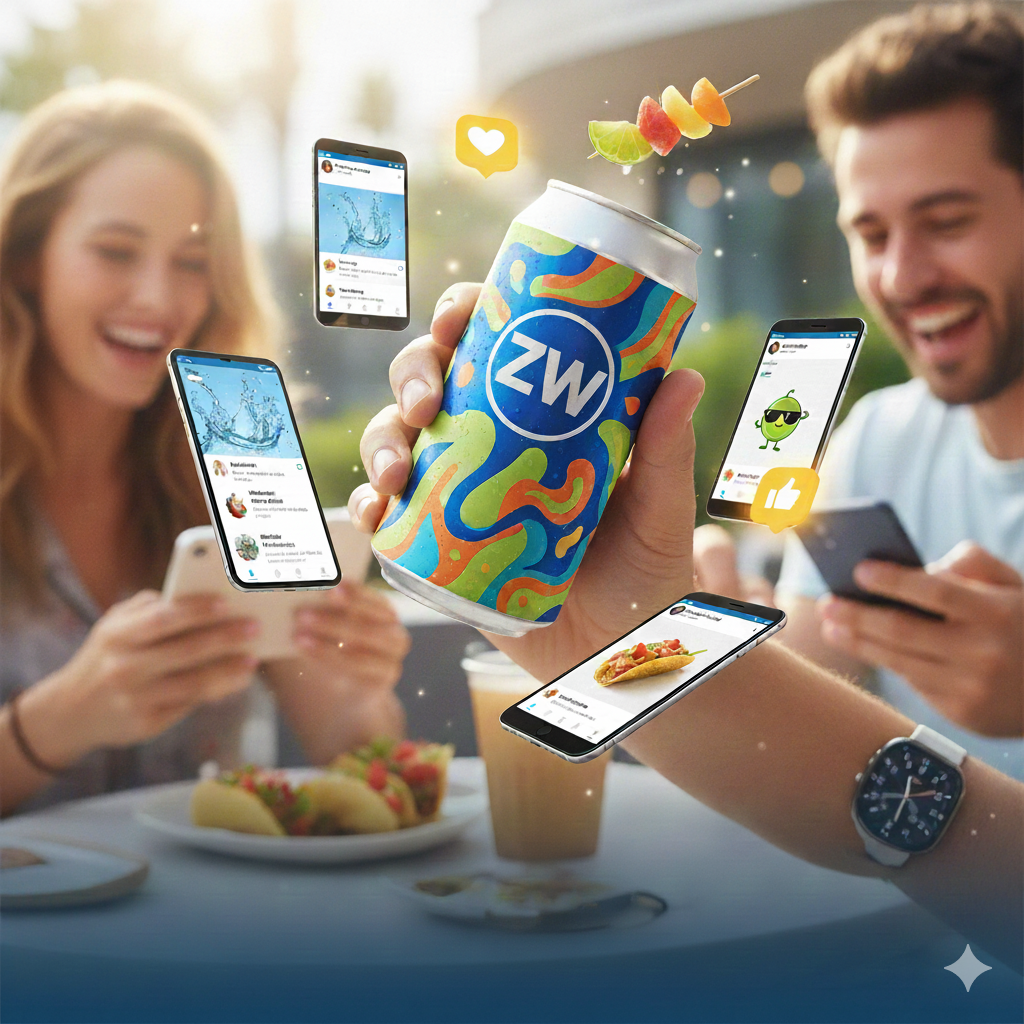
Media snacking and the new rules of brand building in the Food & Beverage industry
How modern media consumption habits are reshaping marketing, creativity, and long-term brand value?
Have you ever heard the term “media snacking”?
It describes the way we increasingly consume content in short, rapid, bite-sized bursts—scrolling through TikToks, glancing at memes, watching (or just listen) six-second videos, and skimming headlines instead of reading full articles. Ironically, while snacking is typically considered an unhealthy eating habit, it has become the dominant media habit of our days. And like nutrition habits, these new consumption behaviors are transforming the way industries—especially Food & Beverage (F&B)—must think about marketing and brand building.
The F&B sector, and as whole FMCG (Fast-Moving Consumer Goods) sector, has historically been one of the strongest experts for brand building. Companies in this sector have mastered the art of creating emotionally resonant brands through distinctive assets, ad campaigns and communication platforms, and product innovations. But today’s fragmented media, combined with consumers who “snack” on content, is rewriting the rules.
This article explores how media snacking and new digital behaviors shape modern FMCG marketing—and what marketers must do to build strong & meaningful brands.
Why Brand Building Still Matters (and it always will)
A brand doesn’t exist in the physical world. You cannot place it on a shelf the same way you place a packaged product. Instead, it exists in our minds—a rich network of associations, memories, emotions, and expectations.
Brand is essential, it is fundamental, because:
Purchases are emotional decisions
While we rationalize buying behavior (“I chose this because it’s healthier/cheaper”), cognitive science shows that decisions are heavily influenced by emotions and subconscious triggers linked to brands. We buy the drink that “feels right,” the chocolate bar that “seems familiar,” or the café that “matches our vibe”
Brands increase stability by reducing the risk
In a world of infinite choice, a trusted brand helps consumers feel confident. Familiarity matters.
Brand equity allows companies to charge premium prices, sustain crisis, launch line extensions or innovation, and secure distribution.
The importance of brand building hasn’t changed. But everything around it has.
“Media snacking” is Today’s reality that impacts requirement to contemporary marketing
Consumers are “Snacking media”, they are switching between apps every few minutes, consuming more content but with less attention per piece, producing spontaneous content themselves (everyone is a media channel), avoiding ads via subscription services, building their own personalized media worlds.
And because attention is fragmented, brands face a new challenge:
How do you promote a “Micheline-star dish” in a world where people only want to snack tiny bites?
This is the central metaphor of modern brand building.
Imagine, if people shifted from eating full meals to constant snacking, how could introduce them “Micheline star” dish? It is a Thought job!
Solution: Cut it to pieces and spread to as many people as possible, do it every day, ensure all (who saw it or tried it) remember the name and the place where chief cooks it…..
The same is for brand. In our days, we have to produce much bigger set of communication assets, do it super-professionally as they are in “snack size”, but they still have to look very appealing, meaningful, engaging - in other words Noticed, Remembered, Understood.
Consumers will not sit through a full “brand dish”—but they might remember the taste if you give them consistent, frequent, appealing bites. In practical terms, this means:
- Campaigns must be broken into dozens of micro-assets
- Each asset must be “snack-able”: short, visually rich, instantly graspable
- The creative idea must survive even when cut into tiny pieces
- Quality must be extremely high—even for secondary assets
- Distinctive brand cues (colors, logos, shapes, sounds) must be unmistakable
- Consistency matters more than ever
This is the art and science of brand building in the era of media snacking.
Three Strategic Principles for brand building today
To thrive in this new landscape, companies need to rethink how they build and manage brands. Below are three essential principles that reflect how leading FMCG players operate today.
1. Control What You Can Still Control: Build a Strong Brand Core
Media may be chaotic, but some elements are still under your control—and these are the foundation of long-term brand equity.
a. Clear and Sharp Brand Positioning
You must articulate the brand’s “center of gravity”:
- What it stands for
- What value it offers
- What distinctive role it plays in people’s lives
Without this clarity, fragmented media will fragment the brand itself.
b. Deliver Your Brand Purpose in Action, Not Words
Consumers—especially Gen Z—are skeptical of empty missions.
Purpose should be felt, not declared.
c. Build Strong Distinctive Brand Assets
This includes:
- Logo
- Color palette
- Iconic visual elements
- Sonic branding
- Taglines
- Characters or brand ambassadors
These must be consistently embedded across every “content snack.”
If someone scrolls past an ad in 0.5 seconds, they should still recognize the brand.
d. Use Partnerships & Collaborations Strategically
Sponsorships and collabs amplify reach and build strong associations.
They work like shortcuts in consumer memory—linking the brand to culture, sports, fashion, gaming, or wellness.
e. Activate Owned Media Fully and Consistently
Your packaging, your website, your store, your social channels—these are the places you have complete control. They should express the brand loudly and coherently, regardless of the chaos elsewhere.
2. Never Stop Paid Media, but optimize it relentlessly with Data
Paid media is still essential for building mass reach—something brands desperately need in a fragmented world. But the way we use paid media must evolve.
Why you can’t stop paid media:
- Organic reach is too limited and unpredictable
- Algorithms favor entertainment, not brand messaging
- You need repeated exposure to build memory structures
- Competitors are investing aggressively
However, the difference today is that data is your competitive advantage. Use all available data:
- Behavioral data
- Sales and transaction data
- Search trends
- Audience segmentation
- Cross-platform analytics
- A/B testing
- Attention measurement tools
Data does not replace creativity—but it ensures creativity reaches the right people at the right time in the right format.
Think of data as the “GPS” that helps your brand navigate an unpredictable media landscape.
3. Monitor Earned Media Constantly—And Respond Fast
Earned media—conversations, reviews, shares, comments, user-generated content—is something you do not directly control. But it is heavily influenced by what you do.
It reflects:
- Real consumer perception
- Cultural relevance
- Social proof
- Buzz and controversies
- Customer satisfaction
- Product experience
In the era of media snacking, earned media is more powerful than ever because a single piece of user content can reach millions overnight.
Earned media should feed back into your paid and owned media strategies. If a certain message or product resonates organically, amplify it. If something sparks criticism, respond transparently, adjust strategy, and rebuild trust.
You do not have control over earned media but via Monitoring earned media you could get control over its impact.
The Future: More Complex, More Data-Driven, More Human
Media snacking has fundamentally reshaped how we build brands.
It made marketing more:
- Fragmented
- Fast
- Competitive
- Technological
- Data-heavy
- And at the same time…more human
Why more human?
Because despite technological complexity, brands still need to connect emotionally. They must trigger feelings, win trust, and enrich everyday life—just like a familiar snack or a comforting drink does.
The challenge is to deliver that emotional connection in micro-moments, on small screens, in fast feeds, across dozens of formats.
Brand building has become more fine-tuned, more scientific, and more complex. But its purpose remains simple: to help people to fall in love and choose something they love.
A Final Thought: Snacking Isn’t Good for You…But It’s Reality
Just like nutritionists warn that constant snacking is not ideal for our bodies, marketers must recognize that media snacking is not ideal for deep attention or long storytelling.
But ignoring reality won’t change it.
Consumers snack on content.
So brands must snack on content production.
The winners in the FMCG industry will be those who:
- Accept this new paradigm
- Create snackable yet meaningful brand assets
- Stay consistent through fragmentation
- Use creativity and interpret the data
- Build brands that live in purpose —not just in advertising
Because, ultimately, while we may snack on media, we still crave brands that offer real value, real meaning, and real emotional nourishment.

Media snacking and the new rules of brand building in the Food & Beverage industry
How modern media consumption habits are reshaping marketing, creativity, and long-term brand value?
Have you ever heard the term “media snacking”?
It describes the way we increasingly consume content in short, rapid, bite-sized bursts—scrolling through TikToks, glancing at memes, watching (or just listen) six-second videos, and skimming headlines instead of reading full articles. Ironically, while snacking is typically considered an unhealthy eating habit, it has become the dominant media habit of our days. And like nutrition habits, these new consumption behaviors are transforming the way industries—especially Food & Beverage (F&B)—must think about marketing and brand building.
The F&B sector, and as whole FMCG (Fast-Moving Consumer Goods) sector, has historically been one of the strongest experts for brand building. Companies in this sector have mastered the art of creating emotionally resonant brands through distinctive assets, ad campaigns and communication platforms, and product innovations. But today’s fragmented media, combined with consumers who “snack” on content, is rewriting the rules.
This article explores how media snacking and new digital behaviors shape modern FMCG marketing—and what marketers must do to build strong & meaningful brands.
Why Brand Building Still Matters (and it always will)
A brand doesn’t exist in the physical world. You cannot place it on a shelf the same way you place a packaged product. Instead, it exists in our minds—a rich network of associations, memories, emotions, and expectations.
Brand is essential, it is fundamental, because:
Purchases are emotional decisions
While we rationalize buying behavior (“I chose this because it’s healthier/cheaper”), cognitive science shows that decisions are heavily influenced by emotions and subconscious triggers linked to brands. We buy the drink that “feels right,” the chocolate bar that “seems familiar,” or the café that “matches our vibe”
Brands increase stability by reducing the risk
In a world of infinite choice, a trusted brand helps consumers feel confident. Familiarity matters.
Brand equity allows companies to charge premium prices, sustain crisis, launch line extensions or innovation, and secure distribution.
The importance of brand building hasn’t changed. But everything around it has.
“Media snacking” is Today’s reality that impacts requirement to contemporary marketing
Consumers are “Snacking media”, they are switching between apps every few minutes, consuming more content but with less attention per piece, producing spontaneous content themselves (everyone is a media channel), avoiding ads via subscription services, building their own personalized media worlds.
And because attention is fragmented, brands face a new challenge:
How do you promote a “Micheline-star dish” in a world where people only want to snack tiny bites?
This is the central metaphor of modern brand building.
Imagine, if people shifted from eating full meals to constant snacking, how could introduce them “Micheline star” dish? It is a Thought job!
Solution: Cut it to pieces and spread to as many people as possible, do it every day, ensure all (who saw it or tried it) remember the name and the place where chief cooks it…..
The same is for brand. In our days, we have to produce much bigger set of communication assets, do it super-professionally as they are in “snack size”, but they still have to look very appealing, meaningful, engaging - in other words Noticed, Remembered, Understood.
Consumers will not sit through a full “brand dish”—but they might remember the taste if you give them consistent, frequent, appealing bites. In practical terms, this means:
- Campaigns must be broken into dozens of micro-assets
- Each asset must be “snack-able”: short, visually rich, instantly graspable
- The creative idea must survive even when cut into tiny pieces
- Quality must be extremely high—even for secondary assets
- Distinctive brand cues (colors, logos, shapes, sounds) must be unmistakable
- Consistency matters more than ever
This is the art and science of brand building in the era of media snacking.
Three Strategic Principles for brand building today
To thrive in this new landscape, companies need to rethink how they build and manage brands. Below are three essential principles that reflect how leading FMCG players operate today.
1. Control What You Can Still Control: Build a Strong Brand Core
Media may be chaotic, but some elements are still under your control—and these are the foundation of long-term brand equity.
a. Clear and Sharp Brand Positioning
You must articulate the brand’s “center of gravity”:
- What it stands for
- What value it offers
- What distinctive role it plays in people’s lives
Without this clarity, fragmented media will fragment the brand itself.
b. Deliver Your Brand Purpose in Action, Not Words
Consumers—especially Gen Z—are skeptical of empty missions.
Purpose should be felt, not declared.
c. Build Strong Distinctive Brand Assets
This includes:
- Logo
- Color palette
- Iconic visual elements
- Sonic branding
- Taglines
- Characters or brand ambassadors
These must be consistently embedded across every “content snack.”
If someone scrolls past an ad in 0.5 seconds, they should still recognize the brand.
d. Use Partnerships & Collaborations Strategically
Sponsorships and collabs amplify reach and build strong associations.
They work like shortcuts in consumer memory—linking the brand to culture, sports, fashion, gaming, or wellness.
e. Activate Owned Media Fully and Consistently
Your packaging, your website, your store, your social channels—these are the places you have complete control. They should express the brand loudly and coherently, regardless of the chaos elsewhere.
2. Never Stop Paid Media, but optimize it relentlessly with Data
Paid media is still essential for building mass reach—something brands desperately need in a fragmented world. But the way we use paid media must evolve.
Why you can’t stop paid media:
- Organic reach is too limited and unpredictable
- Algorithms favor entertainment, not brand messaging
- You need repeated exposure to build memory structures
- Competitors are investing aggressively
However, the difference today is that data is your competitive advantage. Use all available data:
- Behavioral data
- Sales and transaction data
- Search trends
- Audience segmentation
- Cross-platform analytics
- A/B testing
- Attention measurement tools
Data does not replace creativity—but it ensures creativity reaches the right people at the right time in the right format.
Think of data as the “GPS” that helps your brand navigate an unpredictable media landscape.
3. Monitor Earned Media Constantly—And Respond Fast
Earned media—conversations, reviews, shares, comments, user-generated content—is something you do not directly control. But it is heavily influenced by what you do.
It reflects:
- Real consumer perception
- Cultural relevance
- Social proof
- Buzz and controversies
- Customer satisfaction
- Product experience
In the era of media snacking, earned media is more powerful than ever because a single piece of user content can reach millions overnight.
Earned media should feed back into your paid and owned media strategies. If a certain message or product resonates organically, amplify it. If something sparks criticism, respond transparently, adjust strategy, and rebuild trust.
You do not have control over earned media but via Monitoring earned media you could get control over its impact.
The Future: More Complex, More Data-Driven, More Human
Media snacking has fundamentally reshaped how we build brands.
It made marketing more:
- Fragmented
- Fast
- Competitive
- Technological
- Data-heavy
- And at the same time…more human
Why more human?
Because despite technological complexity, brands still need to connect emotionally. They must trigger feelings, win trust, and enrich everyday life—just like a familiar snack or a comforting drink does.
The challenge is to deliver that emotional connection in micro-moments, on small screens, in fast feeds, across dozens of formats.
Brand building has become more fine-tuned, more scientific, and more complex. But its purpose remains simple: to help people to fall in love and choose something they love.
A Final Thought: Snacking Isn’t Good for You…But It’s Reality
Just like nutritionists warn that constant snacking is not ideal for our bodies, marketers must recognize that media snacking is not ideal for deep attention or long storytelling.
But ignoring reality won’t change it.
Consumers snack on content.
So brands must snack on content production.
The winners in the FMCG industry will be those who:
- Accept this new paradigm
- Create snackable yet meaningful brand assets
- Stay consistent through fragmentation
- Use creativity and interpret the data
- Build brands that live in purpose —not just in advertising
Because, ultimately, while we may snack on media, we still crave brands that offer real value, real meaning, and real emotional nourishment.
Hear from our students about their amazing journeys and achievements

At Albert School, the student council fosters community and learning through events. By bringing students together, we enhance campus life and create connections, contributing to develop new soft skills.
Sulian
Bachelor in Business, Data, & AI
Bachelor Business, Data, & AI
Paris

What I like best about Albert School is how the professors foster our ambition and encourage us to have an entrepreneurial mindset!
Prisca
International BBA Business, Data, & AI - General Secretary of the Student Council
International BBA Business, Data, & AI
.png)
“The Business Deep Dives pushed me to grow beyond what I thought possible—turning lessons into real-world experience alongside inspiring companies.”
Samuel
International BBA Business, Data, & AI - Samuel, Student from Rwanda
International BBA Business, Data, & AI
